Drust / World Archive

Two investigations.
One buried truth.

Every survivor starts somewhere. Follow the human trail through cover-ups and cipher cargo, or the elf trail through suppressed archives and engineered burns — then watch where the two collide.

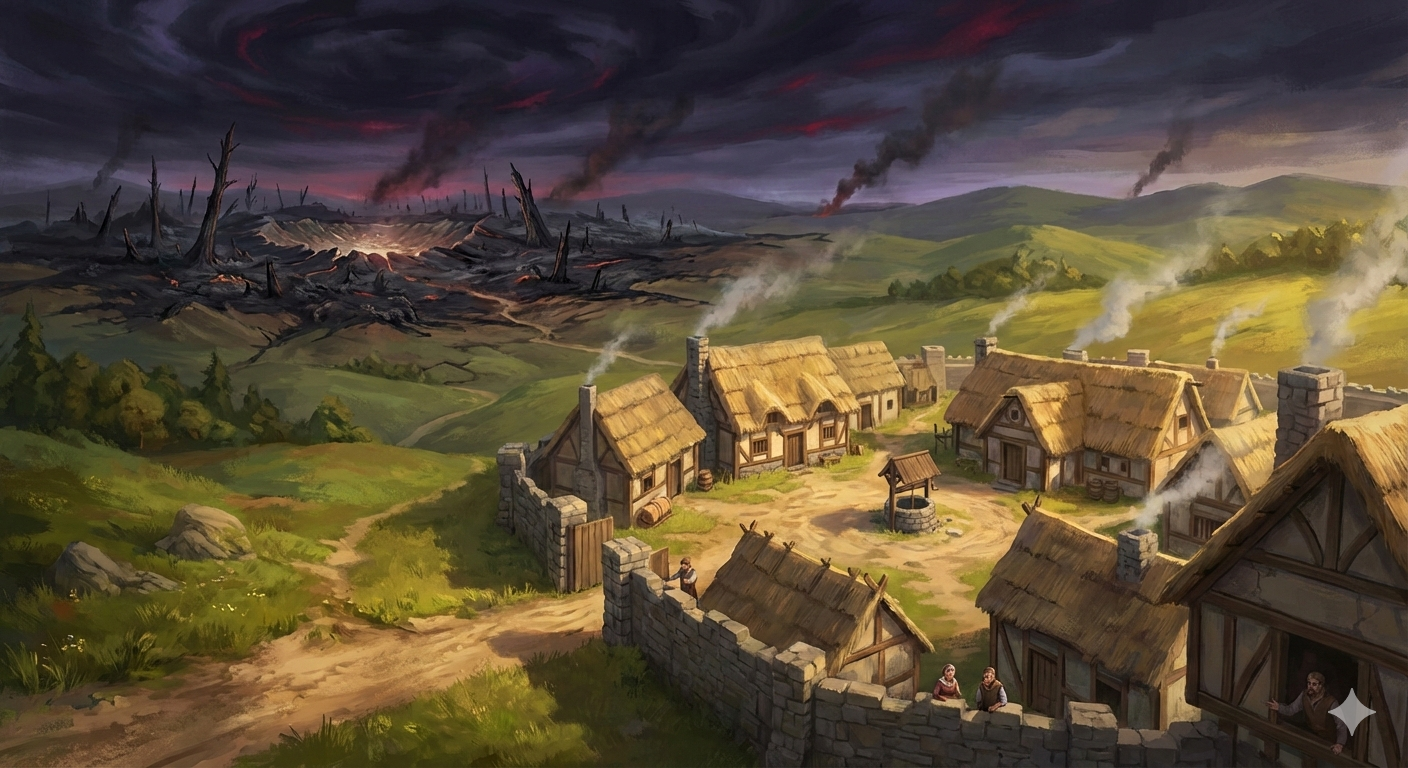
Settlement in the impact corridorSettlement in the impact corridor
Human path · Origin
Levels 1–7 · The Scorched Exodus

The Scorched Exodus

Survival. Witness testimony. The first truth of dragon return.

You wake in the ash corridor of a catastrophic attack the locals call the return of the Scorched One. Hundreds are dead; the village is grieving, not merely damaged. Fused to your hand is a charred signet ring you cannot explain — and it matches records no village clerk should ever have seen.

  • A dragon attacked. That much is certain.
  • The ring ties you to older Dragon Watcher networks and sealed military records.
  • The attack was not entirely random. No one here can say why.

Key figures: Old Silas · Elara · Sir Aldric · Brother Calem · Edda Hearthward

Who were you before the fire?
Human path
Levels 7–15 · The Human Capital

The Human Capital

Bureaucratic power. Controlled access. Hidden records.

Aldric's referral gets you through the gate — and no further. The registry queue is eleven days long. Patrol routes were modified by administrative order three years before the attacks they preceded. Cargo moves through official channels under a cipher no office will claim, and somewhere beneath the streets an informant is willing to talk.

  • Records that should exist don't.
  • Patrol and supply irregularities cluster around dragon-sign incidents.
  • Official infrastructure and informal channels run in parallel — someone manages both.

Key figures: Magistrate Elowen Varr · Harbormaster Nila Gren · The Contact · Quartermaster Halric Doss · Brother Calem

Who has been managing what the capital is allowed to know?

Human path
Levels 18–28 · The Human Borderlands

The Human Borderlands

Wind-scoured frontier. Preparedness over ceremony.

The goblin raids are not opportunistic. Coded tokens, supply caches, directive scrolls — the cells are coordinated, and their logistics trace back to the same trade anomalies Gren flagged at the docks. A pack leader controls camp access. A warlord points the raids at human settlements. Someone points the warlord.

  • Raid cells operate under external coordination.
  • Recovered correspondence correlates directly with the capital's port investigation.

Key figures: Marshal Corin Vale · Tracker Myla Rook · Field Agent Nael Tor

Who is the source of the coordination?

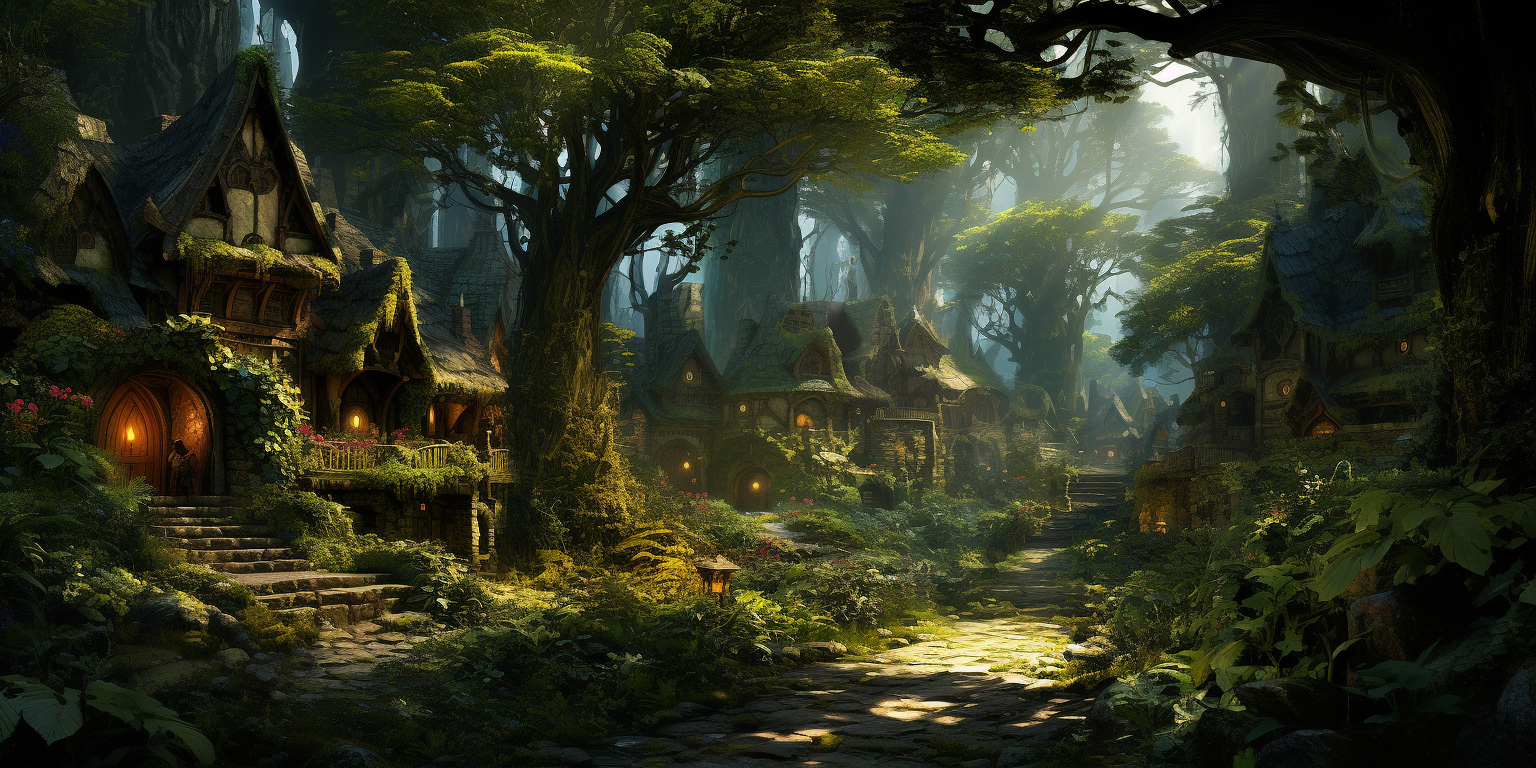
Rillwatch village, expedition returnRillwatch village, expedition return
Elf path · Origin
Levels 1–8 · The Rites Expedition

The Rites Expedition

Expedition discipline. Burn-pattern analysis. Field evidence.

You return from a rites-passage expedition carrying burn data that does not fit. Laid against decades of archived strike records, the pattern is not territorial, not seasonal, not natural. When Archivist Quill begins the synthesis, a directorate order stops it mid-sentence.

  • At scale, the dragon attack pattern is non-random.
  • Something is provoking territorial responses.
  • Leadership does not want this synthesised.

Key figures: Commander Thalen Vire · Archivist Lethariel Quill · Initiate Vael · Caerith Voss · Marshal Aerendir Vale

Why does a culture built on knowledge prohibit looking at what its knowledge means?

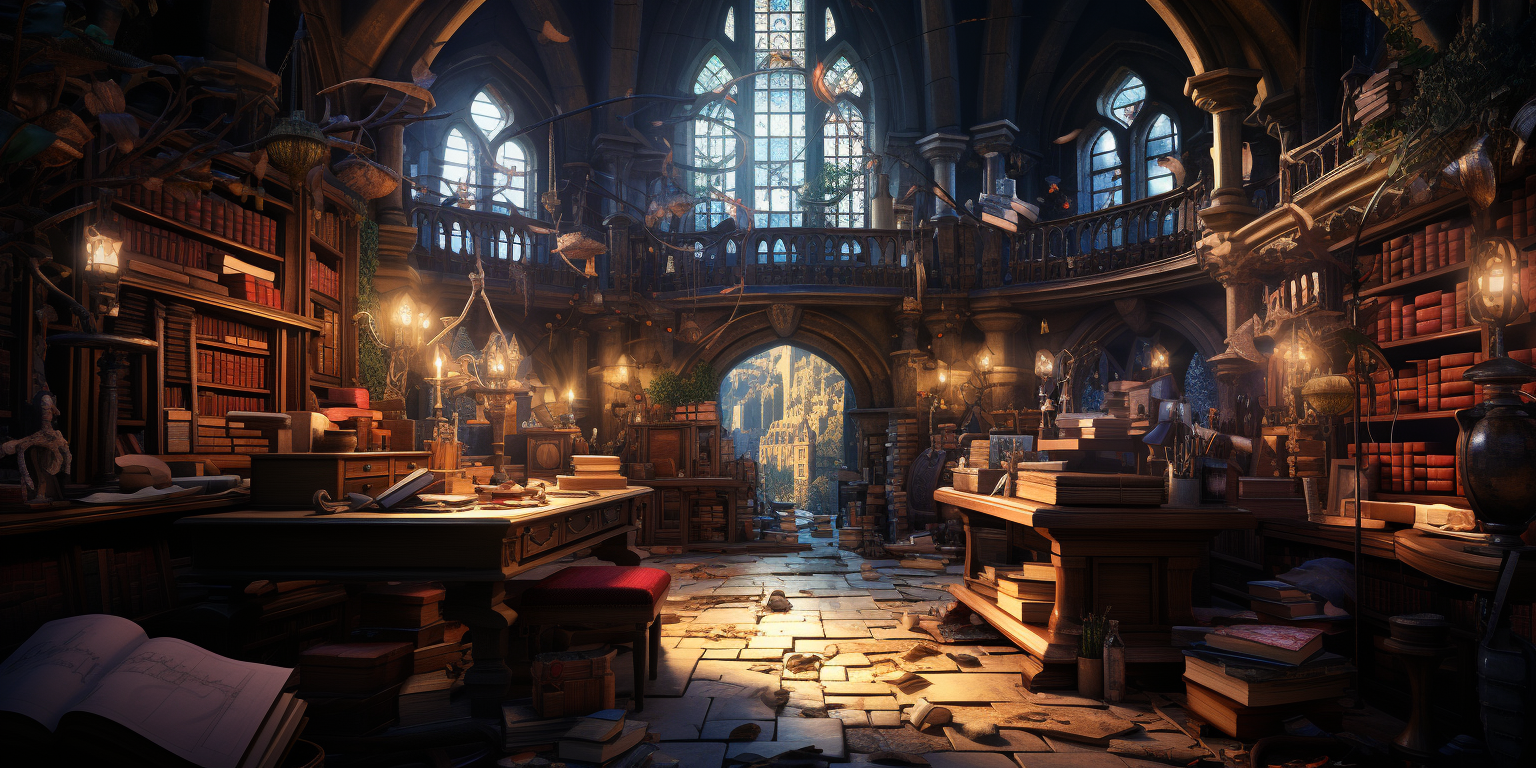
The archive stacksThe archive stacks
Elf path
Levels 8–14 · The Sylvan Archives

The Sylvan Archives

Elegant, procedural — and subtly wrong.

A city of genuine wonder with quiet rot at its centre. Every dragon attack for three centuries is catalogued here — indexed, cross-referenced — and no one is permitted to read all of it at once. A formal censure system exists for precisely that act.

  • The pattern is visible in the data, if anyone were allowed to look.
  • The suppression is policy, not accident.

Key figures: Head Archivist Syllen Mourne · Field Coordinator Aeryn Dast · Archive Warden Thessin

What are the archivists protecting?

The burned deepwoodThe burned deepwood
Elf path
Levels 14–20 · The Cinderveil Expanse

The Cinderveil Expanse

Expedition urgency. Defiance. Mounting evidence.

Caerith Voss is ignoring her recall order. In the burned deepwood her team finds what the archives would never let them infer: poisoned water sources, burned nesting sites, artificial territorial markers. The pattern is not ecological. It is engineered.

  • Physical evidence of deliberate territorial defilement.
  • Witnesses now exist who cannot be ignored.

Key figures: Caerith Voss · Llenne · Dael

Engineered — by whom?

Field evidence

Examine the record.
Build the case.

Recovered documents from your chosen path. Read enough of them and the deeper archive below unseals.

Clearance0 / 6

Restricted archive

Where the two paths converge

Beyond this point the human and elf investigations merge — and the story starts naming names. It's the good stuff, but it's also where the spoilers live. Examine field evidence above to earn clearance, or skip straight to it if you don't mind knowing early.

Clearance0 / 6

Convergence · Paths unite

The shared road.
One conspiracy.

The confluenceThe confluence
Convergence · Paths unite
Levels 18–24 · Ashveil Confluence

Ashveil Confluence

Two investigations collide. Suspicion becomes reluctant alliance.

The human trail — cover-ups, cipher cargo, a warm mineral that moves like contraband — and the elf trail — engineered burns, suppressed synthesis — describe the same thing from different angles. Here, for the first time, an unfamiliar sigil appears on both sets of evidence. Someone has been operating across both territories at once.

  • The two investigations are one investigation.
  • The first Ashborn sigils appear — though no one yet knows the name.
  • A coalition forms.

Key figures: The coalition — survivors, initiates, and the first defectors

Who is managing both cover-ups from above?

Drust concentration, mine floorDrust concentration, mine floor
Shared road
Levels 23–27 · The Drust Warrens

The Drust Warrens

Industrial. A mine that has been running for decades.

Goblin crews mine the sites of old dragon attacks for drust — the warm, faintly luminous mineral the surface trades as a curiosity. Nobody down here asks what it is. A reformer named Skit knows the Trade Council is corrupt; he does not yet know who owns it.

  • Drust is mined at industrial scale — exclusively from old attack sites.
  • Documentary evidence shows drust moving toward a single unknown buyer.

Key figures: Skit, goblin reformer — first appearance

Who is buying — and why only from attack sites?

Dragon-contested terrainDragon-contested terrain
Shared road
Levels 26–30 · The Scorched Reaches

The Scorched Reaches

Dangerous, beautiful, and charged with the weight of what was done here.

In dragon territory the coalition finds the provocation sites themselves: infrastructure, not accident. And for the first time, adult drakes watch the coalition pass — and do not attack.

  • The provocation operations have physical sites in dragon territory.
  • The dragon side of the story begins to be visible.

Key figures: Ash, elf drake warden — first appearance

What do the dragons know?

The foundry districtThe foundry district
Shared road
Levels 32–36 · The Goblin Undercity

The Goblin Undercity

Sprawling, political, alive.

The Trade Council votes on drust regulation while an agent named Harr works its seams. When he is exposed, the truth lands hard: the goblin network was being used — without the majority's knowledge or consent.

  • The supply network had an owner all along.
  • Skit's intelligence maps the full route structure.

Key figures: Skit · Councillor Harr

Where do the routes converge?

Repurposed dwarven minesRepurposed dwarven mines
Shared road
Levels 35–38 · The Deepstone Vaults

The Deepstone Vaults

Industrial archaeology. Deep history in stone.

In repurposed dwarven mines, recovered documents finally give the operation a name — and a schedule. Something ancient is referenced, along with a nexus that is nearly full.

  • The doctrine exists in writing. This was always procedure.
  • The ritual is real — and imminent.

Key figures: Commander Dask of the enemy order — first appearance

What happens when the nexus is full?

What it proves